On-Page SEO vs Off-Page SEO
On-Page SEO vs Off-Page SEO
Strategies and Tactics for SEO Success
When it comes to a comprehensive SEO strategy, marketers know about the importance of on-page SEO tactics like optimizing meta tags, creating a keyword strategy, and anchor links. Today, those fundamentals still matter, but modern SEO also includes user experience signals, Core Web Vitals, structured data, and search intent alignment.
Search engines like Google now evaluate websites based on how well they satisfy user needs, not just how well keywords are placed.
Off-page SEO, or the strategies carried out away from your website, is just as crucial and often overlooked. If you’ve noticed your organic traffic declining, rising bounce rates, lower engagement, or weaker conversion performance, it may be a signal you need to start monitoring your off-page SEO and overall digital presence.
Curious? Take a look at on and off-page SEO and how to build your off-page strategy.
What is On-Page and Off-Page SEO?
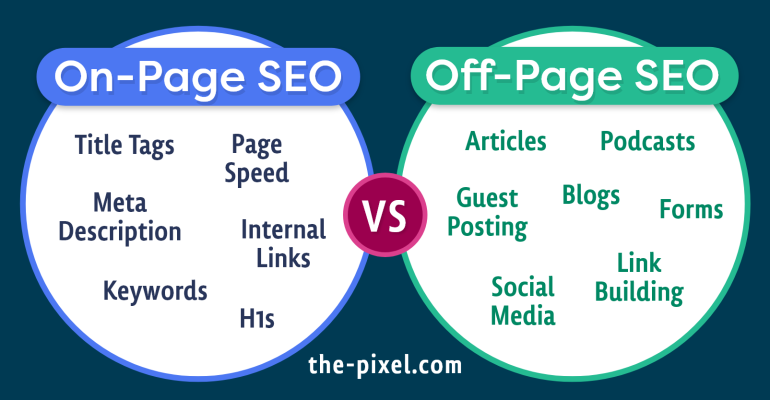
On-page SEO, as mentioned above, involves optimizing your website’s content for users and search engines. It involves elements like:
- title tags
- meta descriptions
- H1s
- internal links
- keywords
- keyword phrases
- informative content
In today’s SEO landscape, on-page optimization also includes:
- page speed and performance (Core Web Vitals)
- mobile responsiveness
- structured data (schema markup)
- accessibility and usability
- content clarity and search intent alignment
- conversion-focused UX and clear calls to action
Essentially, anything that happens on your site that enables a high-ranking search result is on-page SEO.
On the other hand, off-page SEO is any tactic you don’t perform on your website that can help it rank higher in search rankings. Many digital marketers think off-page and link building are synonymous, but other off-page strategies also play a crucial role in driving organic traffic, brand visibility, and trust signals across the web.
Content Marketing
Building an authoritative brand is critical to off-page SEO. You can do it through strategic content marketing, but remember, do it away from your site.
Try guest blogging or co-branding an infographic, survey, whitepaper, or other pieces of material. Whatever you may do for your internal content marketing, you can do externally. Both are important, and both factor into your SEO performance.
Today, content marketing also includes:
- thought leadership articles on industry platforms
- digital PR and media mentions
- podcast features and interviews
- video content on platforms like YouTube
- AI-assisted content distribution and repurposing
Search engines evaluate how often your brand is referenced, cited, and shared across the web, even when links are not directly included.
Reviews
When was the last time you purchased a product or service from a one-star-rated company? Never, right? That’s because your online reputation matters.
Online reviews impact people’s buying decisions, making them an underrated part of your off-page SEO. Just think about shopping via Google. The brands or businesses with the highest ratings often show up first.
Platforms like Google Business Profile, Yelp, and industry-specific directories play a major role in local SEO rankings.
If you want that for your company, then be sure to ask for reviews when you can and always provide a service that deserves a five-star comment.
Modern review strategy also includes:
- responding to all reviews (positive and negative)
- maintaining consistent ratings across platforms
- encouraging keyword-rich customer feedback
- integrating reviews into your website for trust signals
Social Media
Social media, in essence, is another type of search engine, so treat it as such.
Use your keywords on social media, share helpful links, and engage with your users meaningfully and professionally. After all, there’s a high probability that that 97% number includes your own audiences.
Today, platforms like Facebook, Instagram, and LinkedIn influence brand visibility, content distribution, and even search discovery.
Social media now contributes to SEO through:
- content amplification and sharing
- branded search growth
- referral traffic signals
- engagement metrics (likes, shares, comments)
- creator and influencer collaborations
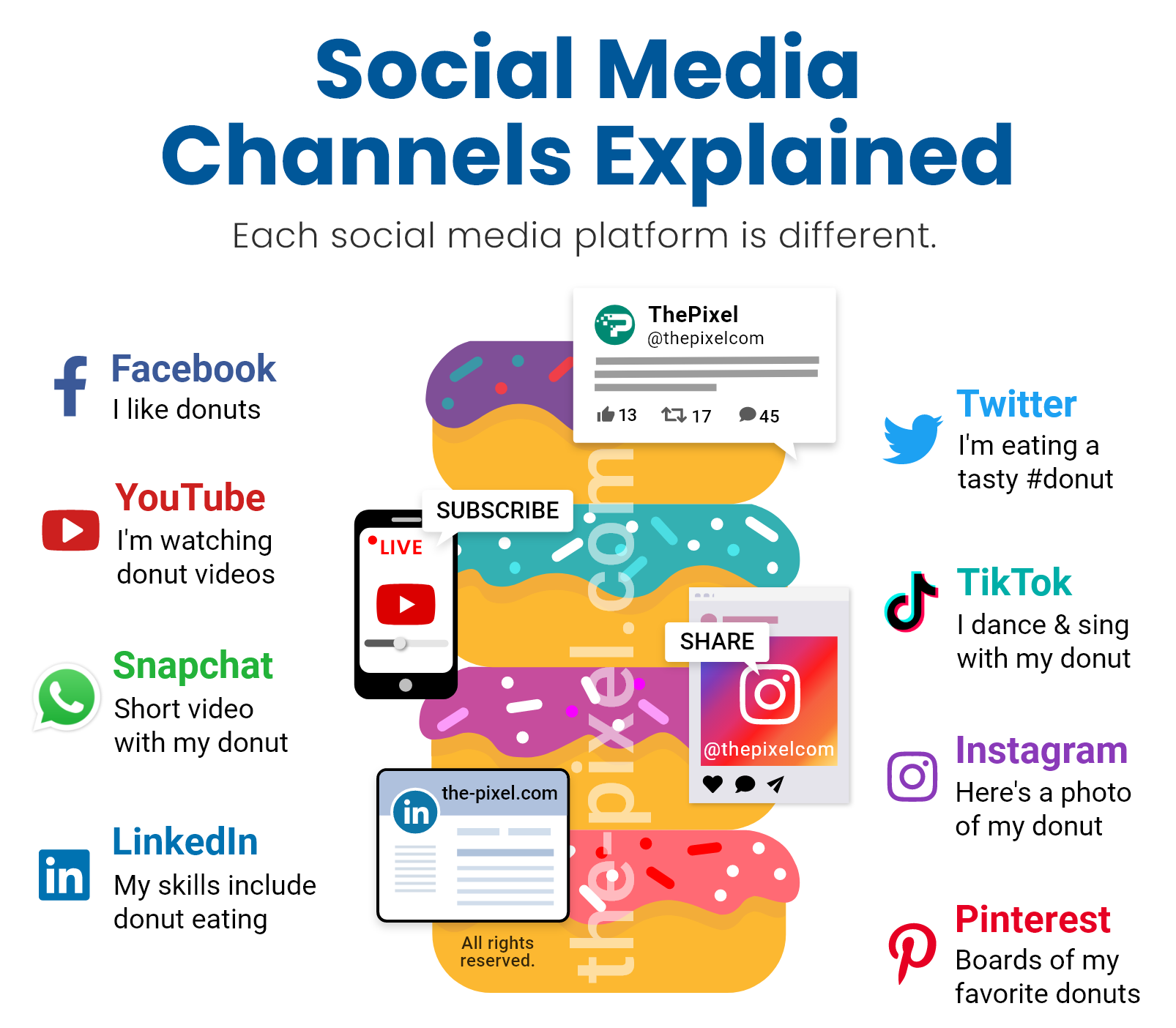
Social Media Channels Explained
Your social media channels each serve different purposes and audiences. Understanding how users interact on each platform allows you to tailor content, messaging, and engagement strategies that support both brand growth and SEO performance.
Link Building
While obviously not the only part of off-page SEO, links have become strong ranking signals to Google of authority, trust, and expertise.
Google assumes sites will link to the most relevant, helpful, and complete information on a given topic. Many of these links are gained organically, but some include link-building activities like the previous examples of guest blogging and co-marketing.
It’s important to note that not all links are created equal. Links from higher domain authority sites have more power than those from less reputable sites. Therefore, if your domain authority is 40, you’ll only really want inbound links from sites with domain authorities of 40 or higher.
Similarly, certain types of links carry more weight than others. For instance, links in the body copy of a webpage vs. in a sidebar are more meaningful to search engines.
Modern link building also focuses on:
- earning links through high-quality content
- digital PR and brand mentions
- topical authority and relevance
- local citations and directory listings
- partnerships and industry collaborations
There is also strong evidence that link variety (links from various domains) is a good thing. The anchor text used on the link is also vital, with branded and natural language links being favored.
Lastly, where links come and go is also essential. Links to and from a homepage may have more impact than links to and from deep internal web pages.
Conclusion
Like on-page SEO, link building, content marketing, reviews, and social media are part of your SEO strategy. It’s a crucial way search engines measure peer influence, authority, and trust.
Today, SEO is no longer just about rankings. It’s about building a strong digital presence across multiple channels, supported by data, user behavior insights, and continuous optimization.
However, it should be closely monitored by marketers who are committed to ongoing optimization based on data, evolving user expectations, and constantly changing search engine algorithms.
A balanced strategy that combines strong on-page foundations with a proactive off-page approach will create long-term visibility, sustainable traffic, and measurable business growth.
Hire ThePixel to build your next website!
Since our founding in 2008, we’ve created and launched many types of business websites. Over the last decade and we’ve learned a thing or two! That’s why we’re masters of our craft, let us help you build the website of your dreams – one that generates traffic, leads and conversions.
Are you ready to start? If yes, contact ThePixel and one of our representatives will guide you through the website phases and how the process works either by a Zoom Meeting or phone.