SEO Keywords and Inbound Marketing in the Age of AI
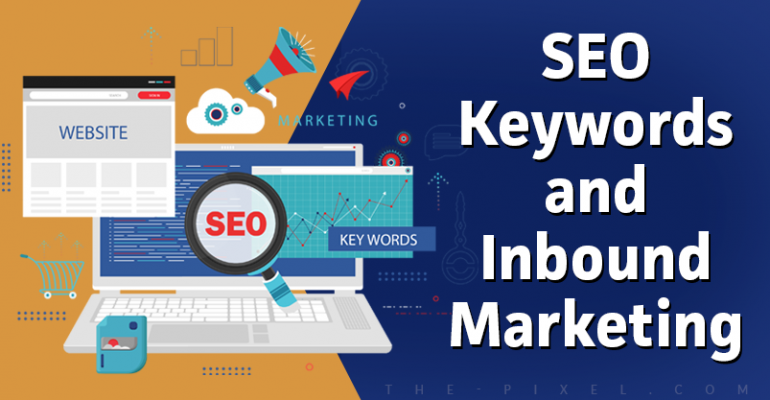
SEO Keywords and Inbound Marketing in the Age of AI
It’s time to get serious about making content valuable for readers, and search engines
Search engine optimization has changed significantly over the past few years. What used to work no longer delivers the same results, and businesses that rely on outdated tactics often struggle to gain visibility.
Today, SEO is not just about keywords. It is about understanding your audience, creating valuable content, and structuring that content in a way that search engines and AI systems can easily interpret.
Search engines like Google now evaluate meaning, context, and user behavior. At the same time, AI-powered search experiences are summarizing content and guiding users toward answers before they even click.
This means your SEO and inbound marketing strategy must evolve.
From Keywords to Topics and Intent
For years, SEO strategies started with a keyword. Marketers would identify a high-volume phrase and build content around it, often forcing the wording to match search demand.
This approach created content that ranked in the short term but lacked depth and clarity.
Today, search engines are far more advanced. They understand relationships between topics, variations of language, and the intent behind a search. Because of this, content built around a single keyword is no longer enough.
A modern approach starts with a broader concept and builds outward.
This allows your content to:
- Cover a topic more completely
- Rank for multiple related search terms
- Provide better value to readers
- Align with how search engines interpret meaning
Keywords still matter, but they support the topic rather than define it.
Why Search Intent Matters More Than Ever
Understanding search intent is one of the most important aspects of modern SEO.
Search engines are no longer focused on matching exact phrases. Instead, they analyze what the user is trying to accomplish and prioritize content that best fulfills that goal.
This means your content must go deeper than surface-level answers.
Strong content should:
- Clearly address the user’s question
- Provide helpful, relevant information
- Anticipate follow-up questions
- Deliver a complete, easy-to-understand experience
When your content aligns with intent, users stay longer, engage more, and are more likely to convert. These signals reinforce your rankings over time.
Inbound Marketing Starts With Valuable Content
Inbound marketing is built on attracting users by providing value before asking for anything in return.
Instead of interrupting users with ads or promotions, you create content that answers their questions, solves their problems, and builds trust.
This approach works because it meets users where they are in their journey.
Effective inbound marketing content includes:
- Educational blog posts that answer common questions
- In-depth guides that explore a topic thoroughly
- Service pages that clearly explain your offering
- Supporting content that builds authority over time
When your content is helpful, users are more likely to engage with your brand and return when they are ready to take action.
Why Starting With Keywords Alone Falls Short
A common mistake in SEO is starting with a keyword and trying to build content around it.
While this may seem logical, it often leads to content that feels forced or incomplete. The focus shifts from helping the user to matching a phrase.
This can result in:
- Awkward or unnatural language
- Shallow content that lacks depth
- Pages that do not fully answer the user’s question
A better approach is to start with a real problem or topic and then use keyword research to support and refine the content.
This creates a stronger foundation for both SEO and user experience.
The Role of Keywords Today
Although SEO has evolved, keywords still play an important role when used correctly.
They help search engines understand what your content is about and allow you to capture more specific searches from users who know what they are looking for.
When integrated properly, keywords help you:
- Organize and structure your content
- Identify gaps and opportunities
- Target high-intent search queries
- Improve visibility across related topics
Instead of forcing keywords into your content, they should be used naturally within a well-developed topic.
AI & SEO Strategy: What’s Changed
AI is reshaping how search works and how content is discovered.
Search engines are increasingly using AI to analyze, summarize, and present information. This means your content is not just competing for rankings. It is competing to be selected as a trusted source.
To succeed in this environment, your content must be:
- Clear and easy to understand
- Structured with strong headings and hierarchy
- Focused on answering real questions
- Supported by depth and context
AI systems favor content that is well-organized and informative. This makes structure and clarity just as important as the content itself.
How to Align SEO With Inbound Marketing
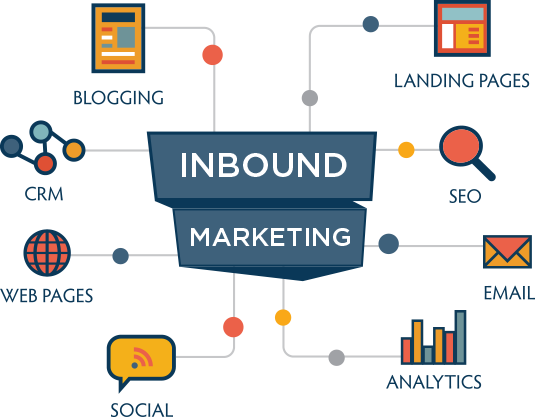
SEO and inbound marketing are most effective when they work together.
Instead of treating them as separate strategies, they should be integrated into one cohesive approach that focuses on attracting, engaging, and converting users.
A strong strategy typically includes:
- Starting with topics your audience cares about
- Breaking those topics into focused content pieces
- Supporting each piece with relevant keywords
- Structuring content for readability and clarity
- Connecting pages through internal linking
This approach builds authority over time and creates a better experience for both users and search engines.
Building Content That Performs
Creating content that ranks and converts requires a balance of strategy, clarity, and execution.
High-performing content is not just written well. It is designed to meet user needs and align with how search engines evaluate pages.
To improve performance, your content should:
- Answer common questions clearly and directly
- Provide meaningful insights and value
- Be easy to scan with clear headings and sections
- Use keywords naturally within context
- Be structured for both users and search engines
When content is useful and easy to understand, it naturally performs better in search.
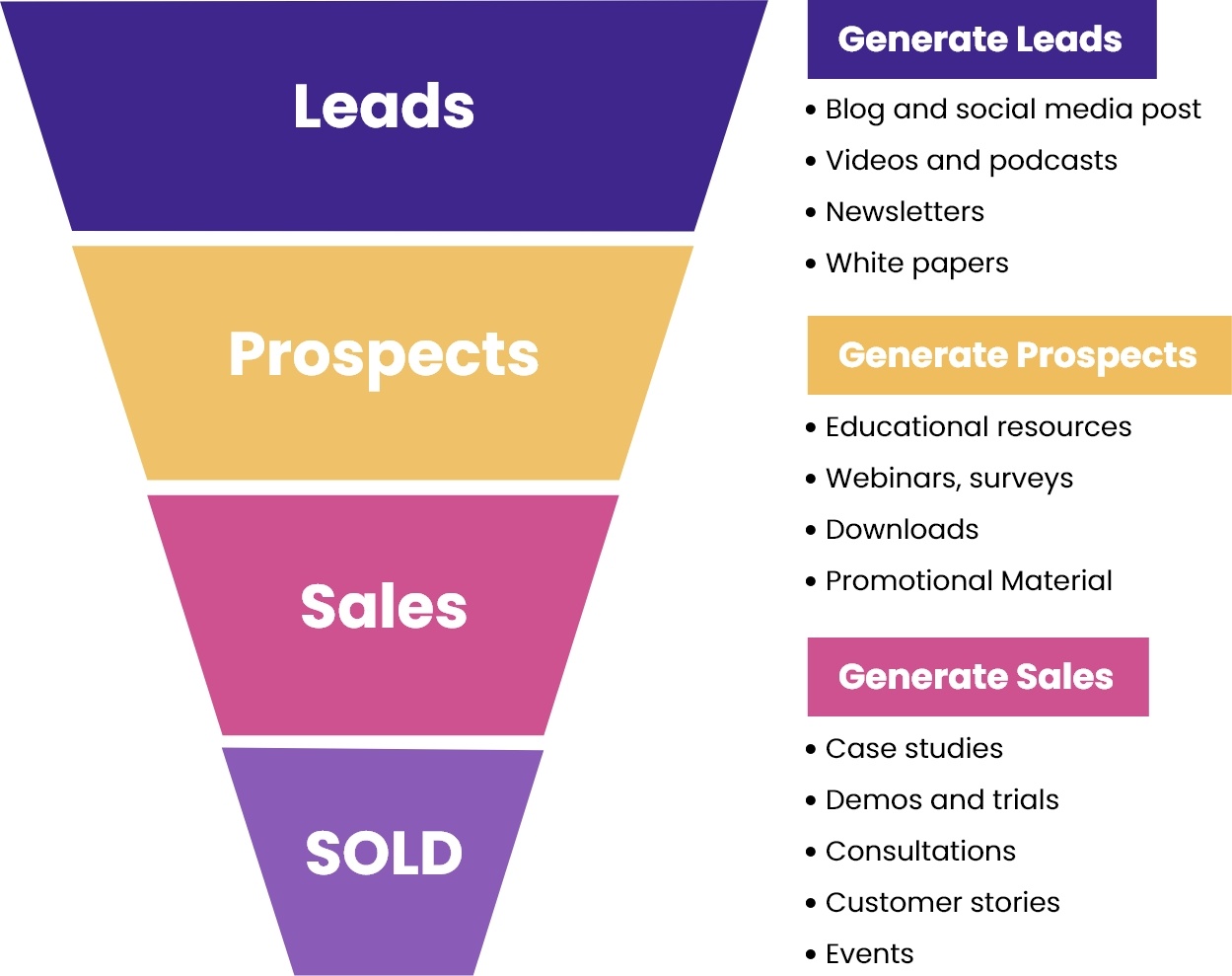
The Inbound Marketing Funnel Still Matters
Even as SEO evolves, the structure of the inbound marketing funnel remains important.
Users move through different stages before making a decision, and your content should support each stage of that journey.
Your website should include content for:
- Awareness, where users are learning and exploring
- Consideration, where users are comparing options
- Decision, where users are ready to take action
By aligning your content with these stages, you create a smoother path from discovery to conversion.
Final Thoughts
SEO keywords and inbound marketing are no longer separate tactics. They are part of a larger strategy focused on delivering value.
Success today comes from:
- Starting with meaningful topics
- Understanding user intent
- Creating clear, structured content
- Supporting that content with relevant keywords
- Adapting to AI-driven search experiences
When these elements work together, your website becomes more visible, more useful, and more effective at generating traffic and leads.
Hire ThePixel to build your next website!
Since our founding in 2008, we’ve created and launched many types of business websites. Over the last decade and we’ve learned a thing or two! That’s why we’re masters of our craft, let us help you build the website of your dreams – one that generates traffic, leads and conversions.
Are you ready to start? If yes, contact ThePixel and one of our representatives will guide you through the website phases and how the process works either by a Zoom Meeting or phone.