
Chiropractic Website UX & Conversion Optimization
Conversion Optimization / UX Research / Chiropractic
Chiropractic Website UX & Conversion Optimization
Creating clearer paths from patient research to consultation inquiries through purposeful UX design and evidence-informed improvements.
For Thrive Care, ThePixel connects patient-centered design with search performance, website behavior, and opportunities to improve consultation pathways.
- Conversion Optimization
- Patient Journey UX
- Analytics & Research
01 / The Business Challenge
Website visits matter when patients can find a meaningful next step.
Visitors may arrive through search while researching pain, symptoms, and treatment options—often before they are ready to contact a clinic.
The challenge is to support their research without hiding the opportunity to ask questions or request a free consultation.
Conversion optimization begins by understanding the journey, not simply adding more buttons.
- Help patients find relevant conditions and care information
- Reduce friction between content and contact options
- Make free consultation actions visible and understandable
- Evaluate which pathways lead to meaningful inquiries
02 / Conversion Opportunities
Identify where patient intent and website actions connect.
Organic Discovery
Understand which search queries and landing pages bring prospective patients to the website.
Content Engagement
Evaluate whether visitors can find relevant care information and move between related pages.
Consultation Intent
Assess whether contact and consultation actions appear at the right moments in the journey.
03 / UX & Conversion Strategy
Design useful pathways before asking visitors to convert.
A strong conversion journey connects a patient’s question to useful content, builds understanding, and presents an appropriate next step.
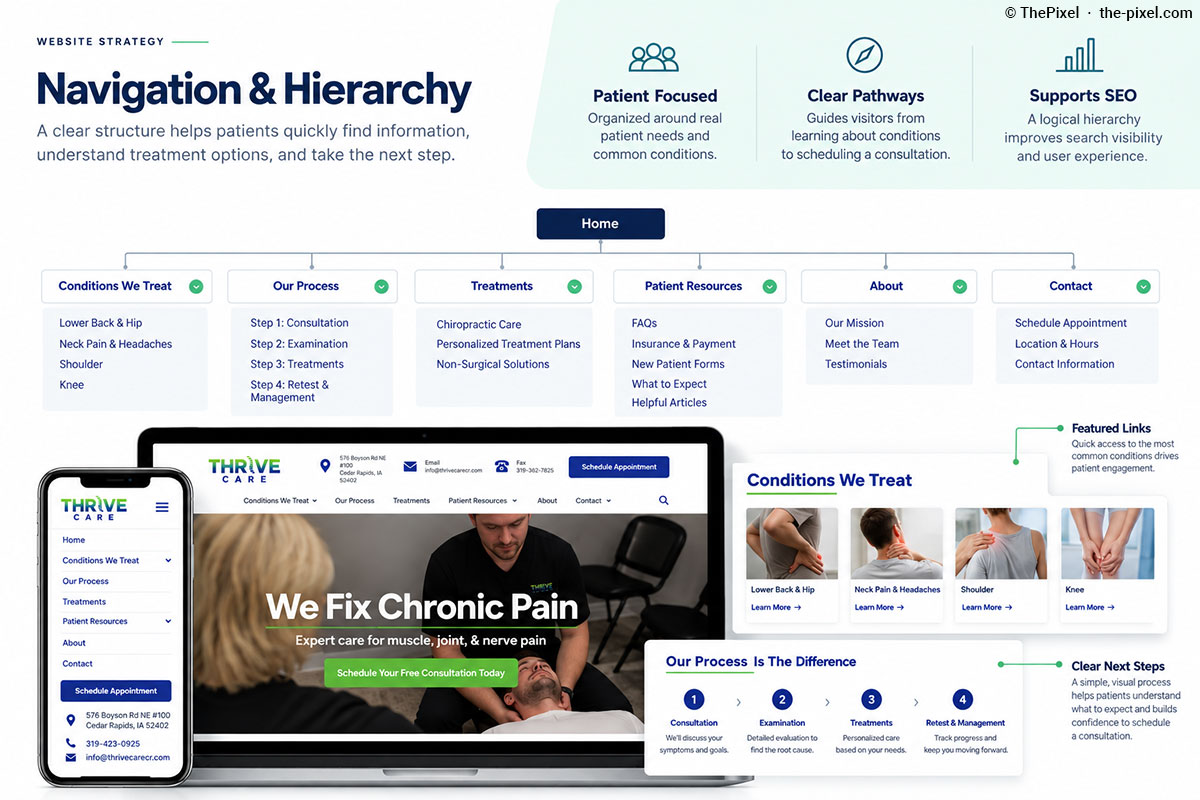
Thrive Care’s website strategy emphasizes readable condition information, consistent interface patterns, and recognizable consultation options.
- Connect relevant care pages through contextual links
- Keep free consultation CTAs descriptive and consistent
- Minimize unnecessary steps in contact pathways
- Use accessible forms and clear expectations
04 / UX & Conversion Decisions
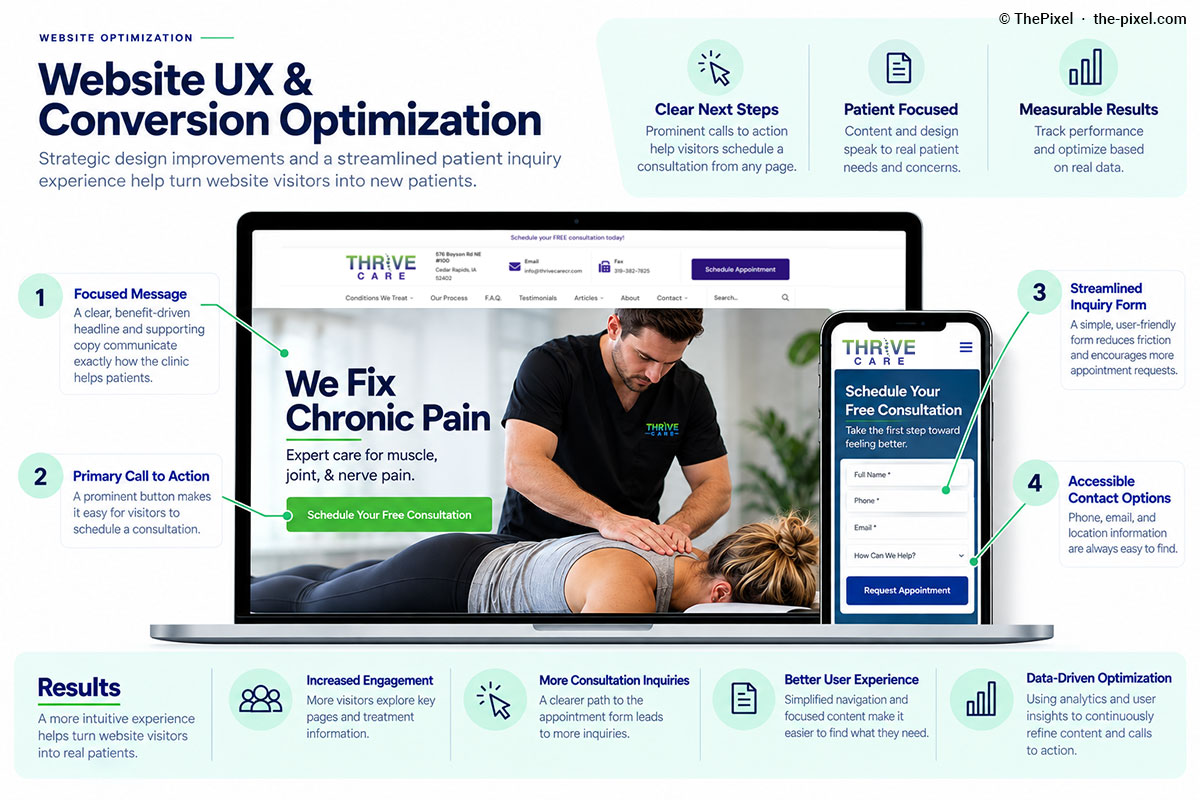
Three decisions that make the next step easier.
Relevant Calls to Action
Present consultation options alongside relevant care information without interrupting research.
Consistent Contact Paths
Use familiar button labels and predictable destinations across desktop and mobile experiences.
Clear Form Experience
Use understandable labels, essential fields, and feedback that helps patients complete an inquiry.
05 / Patient Conversion Journey
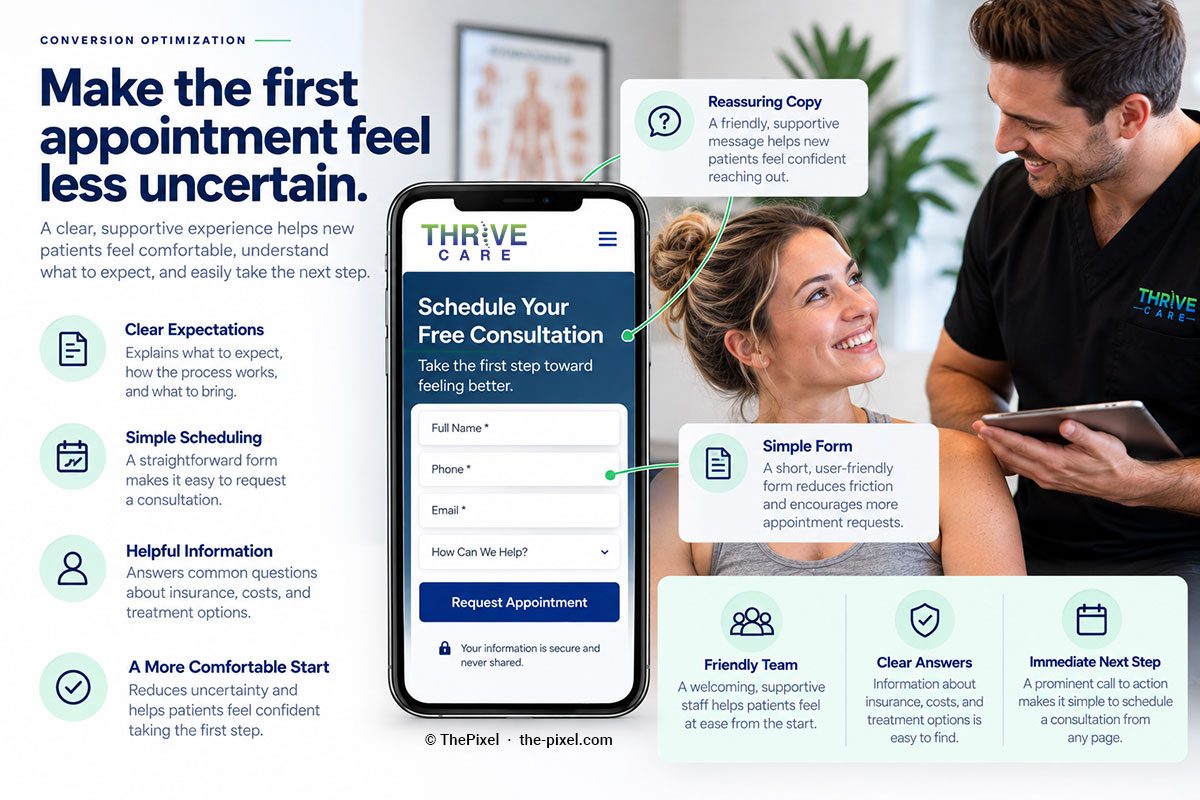
Move from an initial question to a consultation opportunity.
A patient may discover the clinic through a condition-related search, explore care information, and then decide whether to request a free consultation.
Each stage should offer context and a clear, non-pressuring next action.
- Discover a relevant condition or care page
- Explore treatment information and clinic details
- Recognize a consultation or contact option
- Complete an inquiry with minimal friction
06 / Quantitative & Qualitative Research
Combine measurable behavior with context about usability.
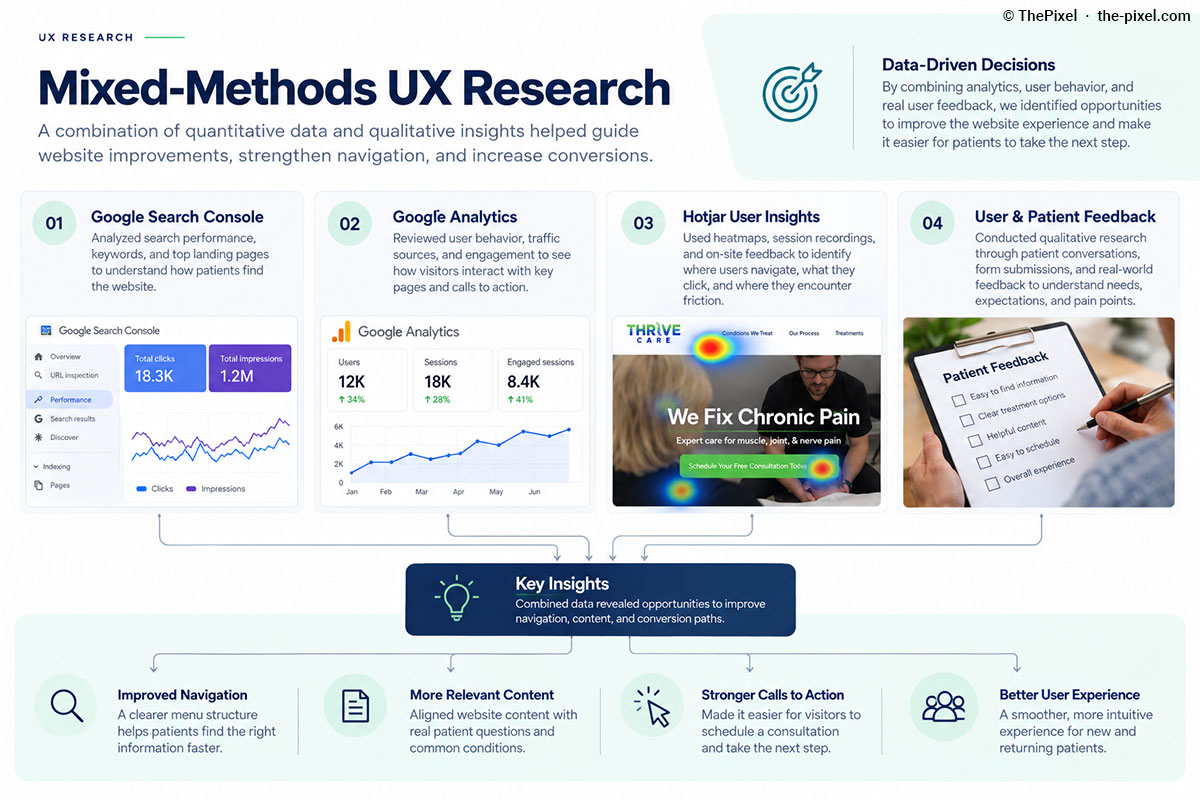
Numbers can reveal where users enter, which pages they engage with, and whether configured conversion actions occur. Qualitative insights help explain potential barriers.
Thrive Care has historical Google Search Console data available to inform prioritization, with Google Analytics and Hotjar supporting ongoing evaluation.
- Quantitative: queries, clicks, page engagement, tracked events
- Qualitative: behavior observations, usability feedback, friction points
- Compare findings before prioritizing design changes
- Reassess after changes to see whether patterns improve
07 / Measurement Framework
Define what success means before measuring improvements.
Google Search Console
Review search queries, impressions, clicks, and landing pages to understand organic discovery.
Google Analytics
Configure and review relevant events such as form submissions, phone-link clicks, and consultation actions.
Hotjar & Feedback
Study behavior patterns and qualitative observations to find potential friction in key journeys.
08 / Testing & Iteration
Make improvements based on evidence, not assumptions.
Conversion optimization is a cycle of observation, hypothesis, refinement, and evaluation.
Potential tests can focus on CTA placement, clarity of consultation messaging, contact form usability, and the transition between condition pages and contact options.
- Identify a specific source of friction
- Prioritize one measurable hypothesis
- Update the relevant interface or content
- Compare subsequent behavior and inquiry outcomes
09 / Ongoing Optimization
Build a repeatable process for better patient journeys.
The goal is a website that is easier to use and easier to evaluate as patient needs and search behavior change.
Future priorities can be guided by Search Console trends, Analytics event data, Hotjar observations, and feedback from real patient inquiries.
Featured Case Study / Chiropractic
Explore the conversion strategy behind Thrive Care's website redesign.
ThePixel redesigned Thrive Care's website to improve clarity, patient journeys, and the foundation for ongoing SEO and conversion improvements.
Explore how website strategy, UX design, WordPress development, and measurement fit together across the project.
- Patient-centered navigation and content hierarchy
- Chiropractic website UX and consultation pathways
- Search Console, Analytics, and Hotjar-informed improvements
Frequently Asked Questions
Questions about chiropractic website conversion optimization.
What is chiropractic website conversion optimization?
It is the process of improving website journeys and consultation actions through research, usability improvements, and measurement.
Which actions should a chiropractic website measure?
Useful actions can include consultation form submissions, appointment requests, phone-link clicks, and other properly configured contact events.
How do analytics and Hotjar inform optimization?
Google Analytics and Search Console show traffic and behavior patterns; Hotjar and user feedback can provide context for where visitors encounter friction.
Does conversion optimization guarantee more appointments?
No. Optimization is an iterative process. Changes should be evaluated against configured conversion events and actual inquiry outcomes.
Conversion Optimization / UX Research / Chiropractic
Is your website turning patient interest into meaningful inquiries?
ThePixel helps healthcare and service businesses improve consultation pathways, website usability, and measurement strategies.
Serving Dubuque, Cedar Rapids, Iowa City, Davenport, and businesses throughout Iowa.