
Manufacturing Website Strategy
Website Strategy / Information Architecture / Manufacturing
How Website Strategy Simplifies Complex Manufacturing Information
A look at how ThePixel approached AMTek Microwaves’ complex equipment, services, support, and global distributor information through a clearer website hierarchy.
For a specialized industrial manufacturer, a useful website must make detailed information easier to discover without losing the technical context customers need.
- Manufacturing Websites
- UX & Digital Strategy
- Custom WordPress Development
01 / The Business Challenge
Complex industrial information needs a clear path.
AMTek serves visitors who may be comparing industrial microwave equipment, exploring applications, looking for services, or locating support and distributor information.
These audiences bring different questions and levels of technical knowledge. A website organized only around internal departments or broad labels can make the next step difficult to recognize.
The design challenge was to give specialized information a logical home while keeping common customer tasks visible.
- Clarify equipment, applications, services, and support pathways
- Help different audiences recognize relevant information
- Create a scalable foundation for new content
- Make it easier to move from research to an appropriate next step
02 / Information Architecture
Start with audiences, tasks, and content relationships.
Audience Needs
Identify what prospective buyers, current equipment owners, distributors, and other visitors need to accomplish.
Content Groups
Distinguish equipment information, applications, services, resources, and company information.
Navigation Language
Choose clear labels and pathways that make sense to visitors, not only internal teams.
03 / The Website Strategy
Organize the website around how customers look for information.
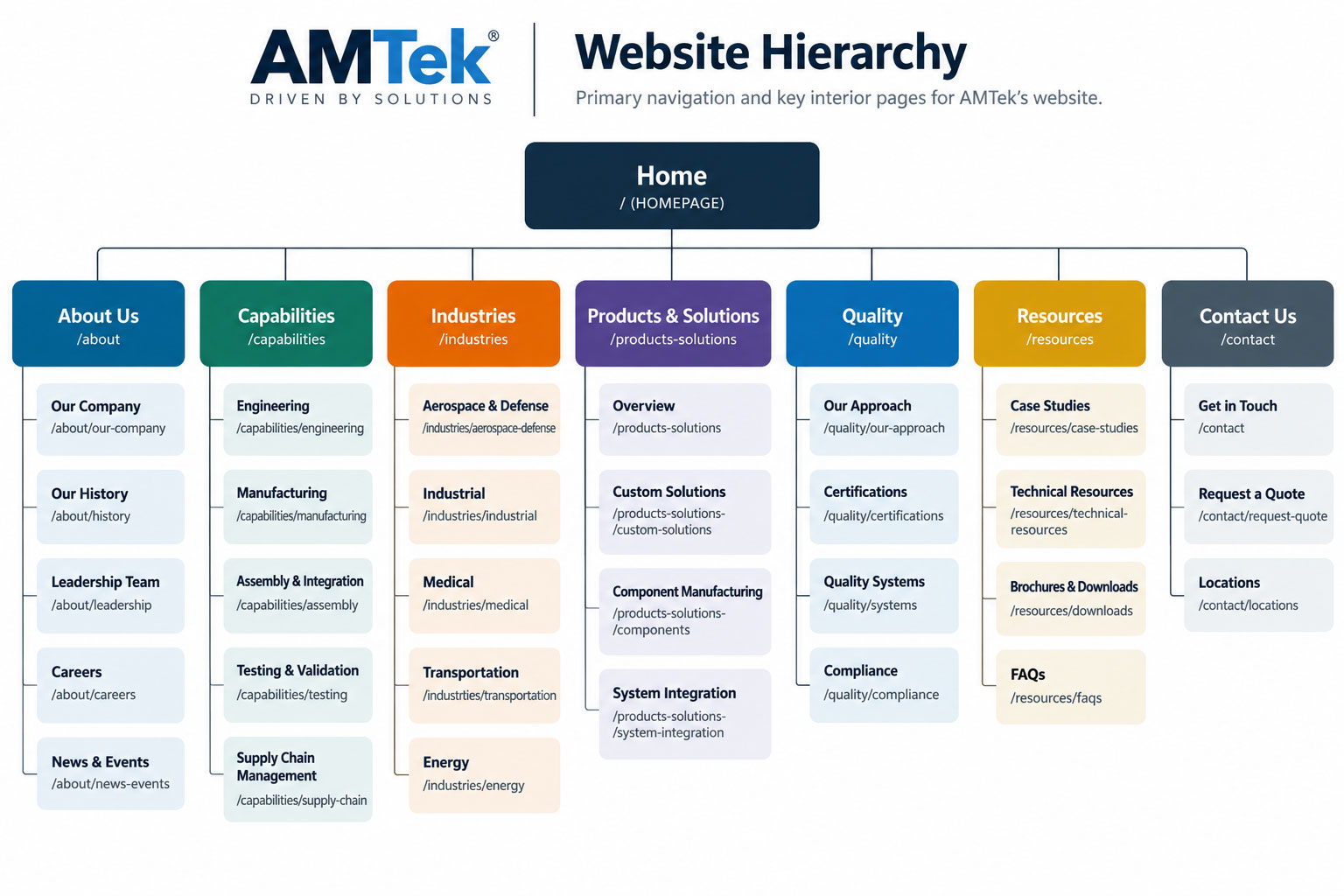
ThePixel developed a proposed page hierarchy that separates major information types and connects them through consistent navigation and interior-page patterns.
The goal is not to reduce technical depth. It is to make that depth easier to explore by placing related information together and providing clear routes to supporting content.
- Equipment and application information grouped logically
- Dedicated service and support pathways
- Clearer connections between related pages
- Reusable templates for consistent content presentation
04 / UX & Content Decisions
Three design decisions behind the structure.
Define the Primary Paths
Make equipment, services, support, and company information distinct enough for visitors to recognize quickly.
Use Consistent Page Templates
Keep headings, supporting content, related links, and calls to action in familiar locations across interior pages.
Connect Related Information
Provide contextual links between equipment, relevant applications, services, and next-step actions.
05 / Navigation Experience
Make navigation a decision-making tool.
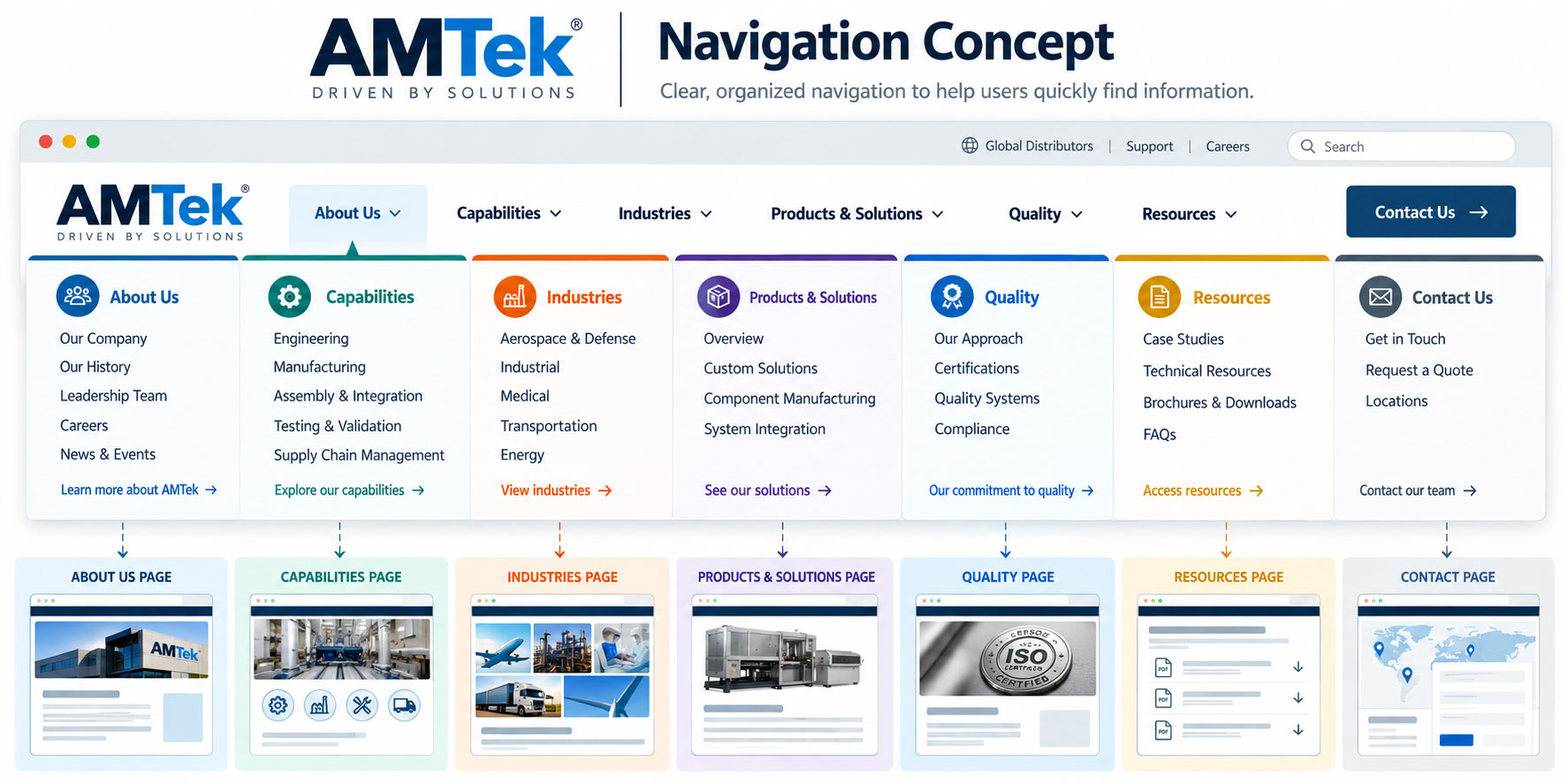
Navigation should help visitors understand both where they are and where to go next. ThePixel considered the relationship between top-level labels, interior page headings, and contextual links.
Rather than forcing every visitor through the same route, the design creates multiple relevant entry points to deeper technical content.
- Recognizable primary navigation labels
- Consistent breadcrumbs and page headings
- Related content links within the page
- Clear support and inquiry actions
06 / Interior Page Templates
Build repeatable page patterns without making every page identical.
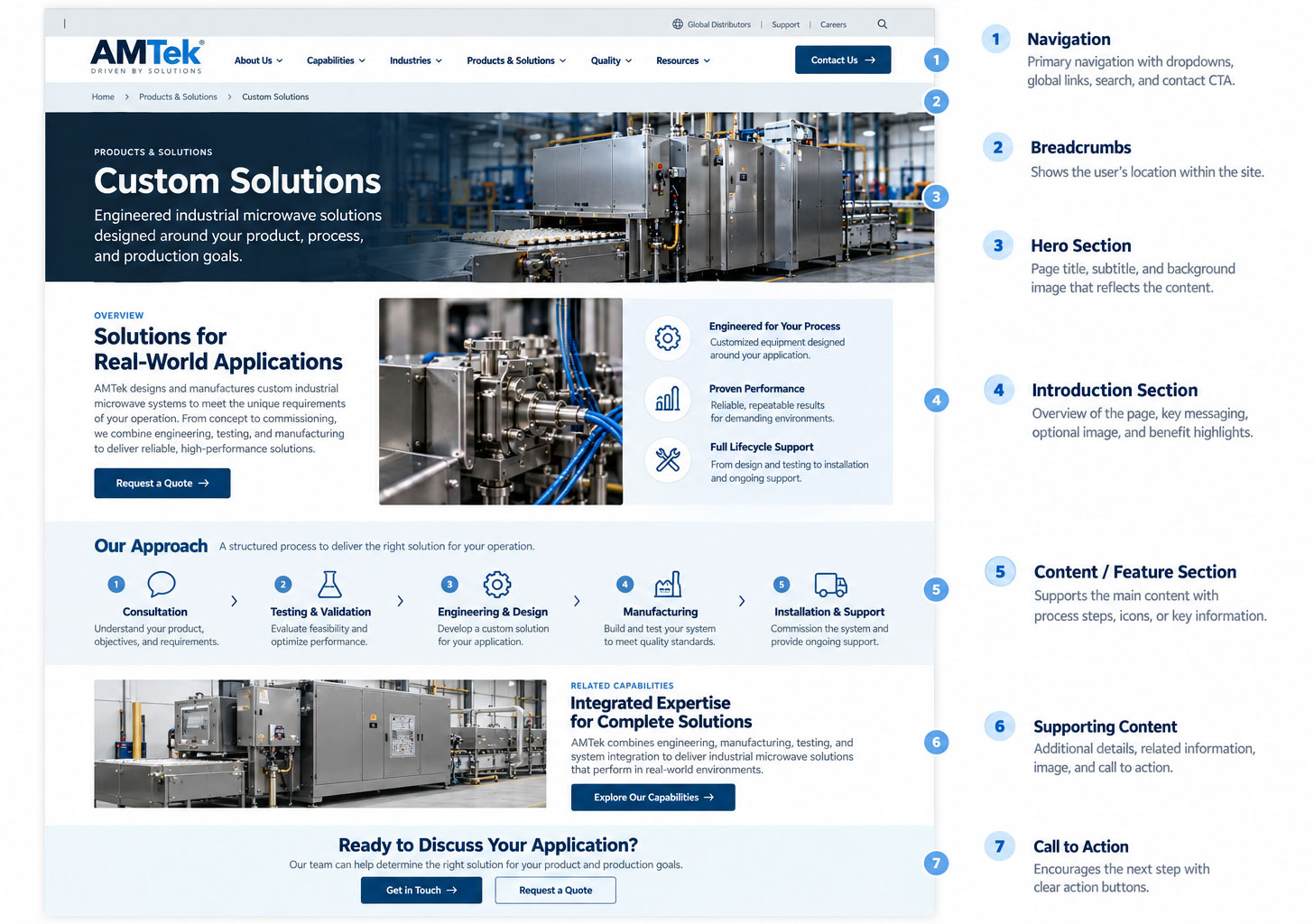
A complex manufacturing website benefits from repeatable components. ThePixel planned page structures that can accommodate technical detail while keeping presentation consistent.
Equipment, service, and informational pages can share foundational patterns while retaining content specific to each topic.
07 / Distributor & Global Information
Help a global audience find the right information.
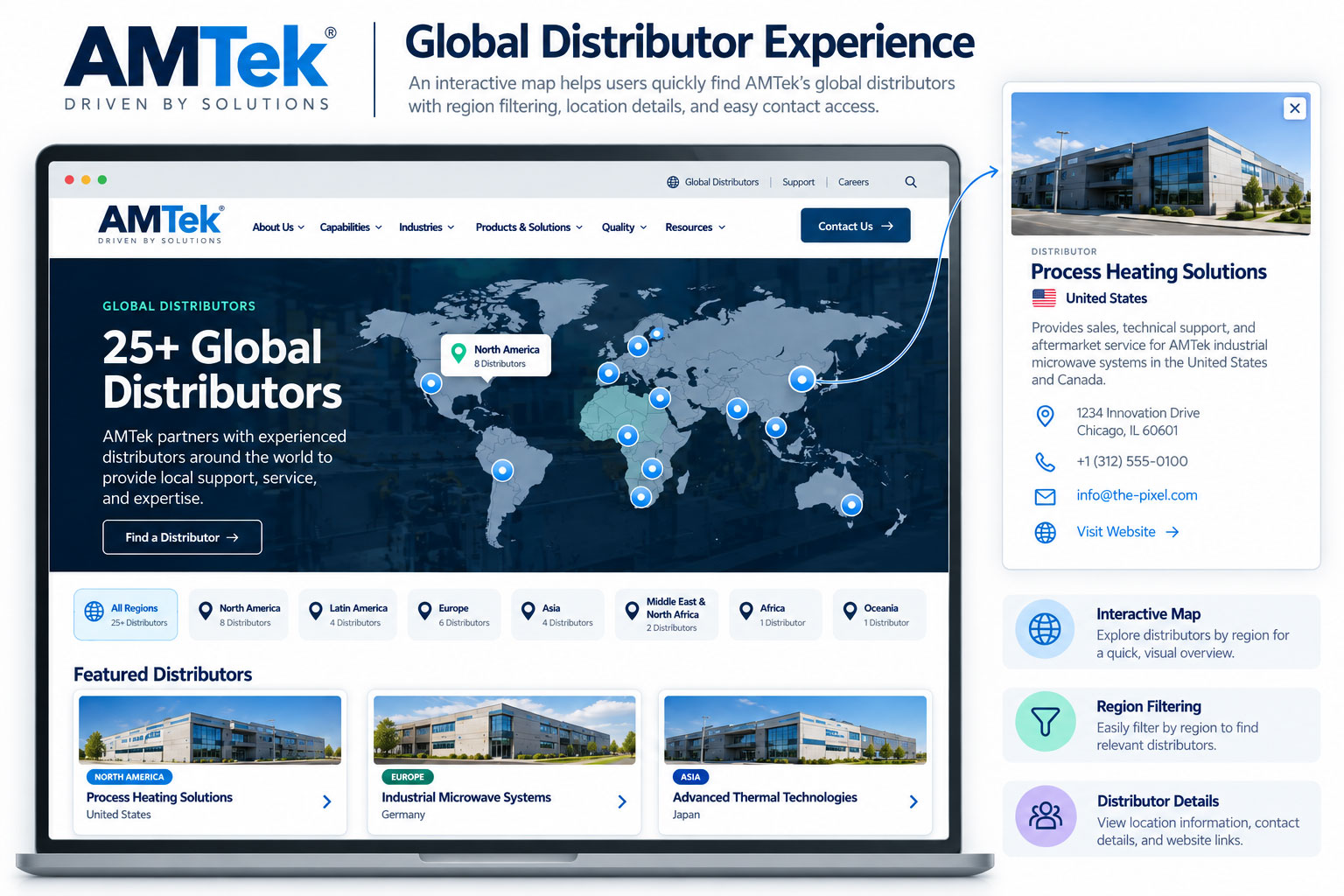
AMTek works with a global distributor network. That introduces another information-finding task: visitors may need to locate regional contacts or understand where the company is represented.
The website strategy considers how distributor content can be organized and linked without overwhelming equipment and service navigation.
- Clear distributor discovery entry points
- Geographic grouping where useful
- Relevant routes back to product and contact information
08 / Intended Outcomes & Measurement
Measure whether visitors can find what they need.
Content Discovery
Potential measures: navigation paths, internal search queries, and visits to key equipment and service pages.
Customer Task Completion
Potential measures: successful journeys to support, distributor, and inquiry destinations.
Content Maintenance
Potential measures: consistency of new pages and ease of publishing or updating information.
Featured Case Study / Industrial Manufacturing
See the bigger picture behind the AMTek website redesign.
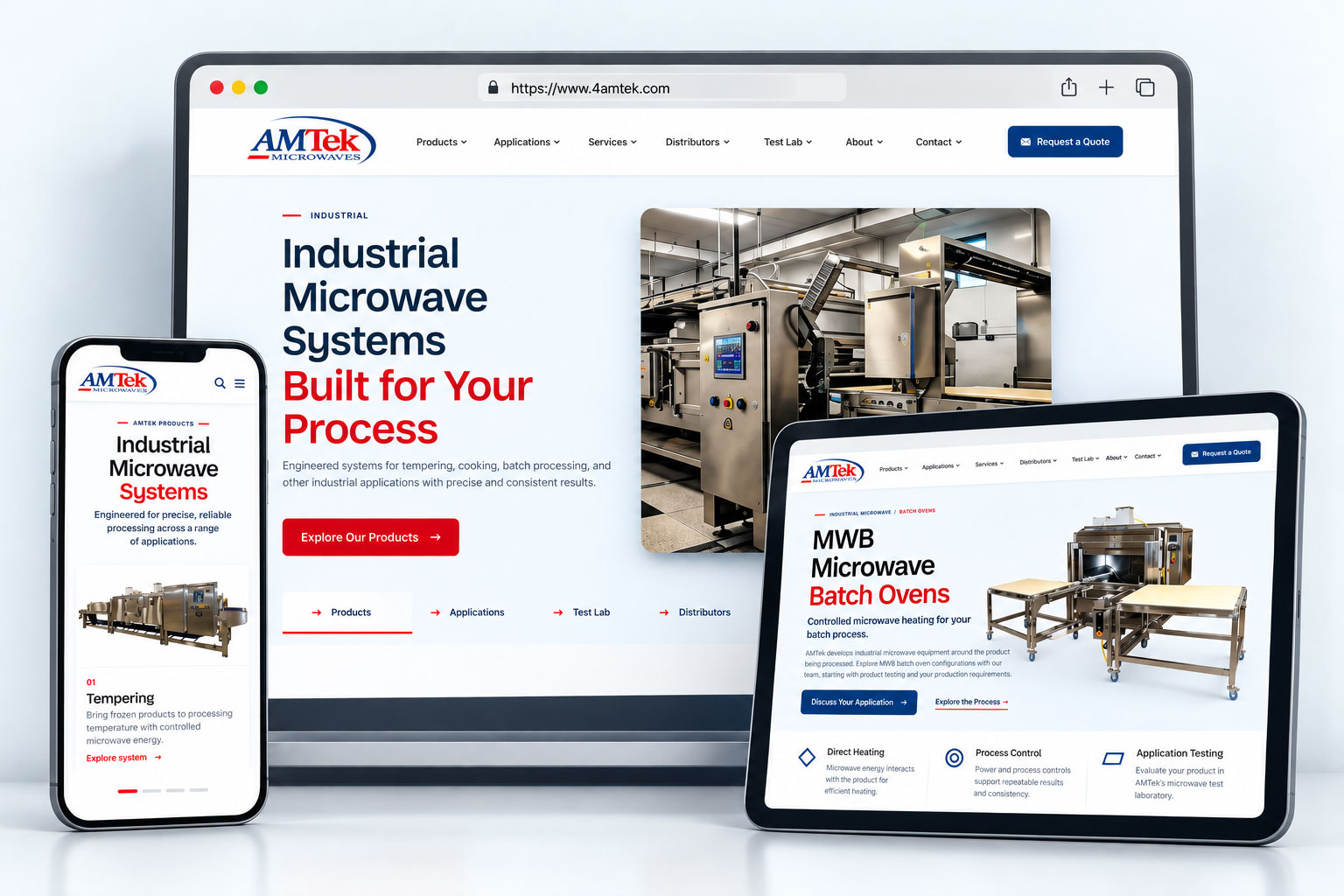
Three focused customer interactions are part of a broader digital experience designed for a global industrial microwave equipment company.
Explore how ThePixel approaches website strategy, information architecture, UX design, custom WordPress development, and search visibility across the AMTek project.
- Manufacturing website strategy and information architecture
- UX design for customer inquiries and equipment support
- Custom WordPress development and SEO planning
Frequently Asked Questions
Questions about this approach.
Why is information architecture important for manufacturing websites?
It helps visitors locate technical products, applications, support, and other content without having to understand a company’s internal organization.
Does a simpler website structure mean less technical information?
No. The goal is to organize detailed content into clearer groups and provide useful links between related topics.
How can website navigation improvements be evaluated?
Review task completion, navigation paths, internal search behavior, and qualitative usability feedback after implementation.
Can a WordPress website support complex industrial content?
Yes. Well-planned content structures and reusable templates can support detailed industrial information while making pages easier to maintain.
Website Strategy / UX Design / Manufacturing
Is your website making it easier for customers to do business with you?
ThePixel helps manufacturers and service businesses improve website clarity, customer journeys, and opportunities for meaningful inquiries.
Serving Dubuque, Cedar Rapids, Iowa City, Davenport, and businesses throughout Iowa.